

Our Top Picks


Sassafras looks easy to cut until you live with the table. The wood is soft and light, it smells like root beer when the saw spins up, and the grain runs coarse enough to tear if the blade is dull or the tooth count is wrong. A board that leaves the saw with fuzzy edges needs extra sanding, and a soft top shows every clamp mark and every bump long after the finish cures. Choosing the right blade is really a choice about how much cleanup you want to do and how clean the joints will look when the legs meet the apron.
These five blades suit first-time table builders, weekend woodworkers, and anyone building a light side table or hall table from sassafras. Each pick below comes from the name and specifications printed on its Amazon product page, so you can match the tooth count, kerf, and hook angle to your saw before you order.
Quick Picks
As an Amazon Associate we earn from qualifying purchases.
| Product | Best for | Key spec from title |
|---|---|---|
| Freud LU80R010 | Glass-smooth sassafras tabletops | 80-tooth Hi-ATB, full kerf |
| Diablo D1060X | Clean crosscuts in soft boards | 60-tooth Hi-ATB, thin kerf |
| Freud LU88R010 | Everyday ripping and crosscutting | 60-tooth ATB, thin kerf |
| Diablo D1050X | Fast rips in leg stock | 50-tooth ATB, thin kerf |
| Freud LU83R010 | Flat-bottom grooves and dados | 50-tooth ATB with flat-top raker |
How to Choose
Match the tooth count to the cut
Tooth count decides how smooth the edge looks when the board leaves the saw. Sassafras is soft with coarse grain, so a low tooth count can tear fibers and leave a fuzzy edge that needs heavy sanding. An 80-tooth blade leaves a nearly sanded edge on a tabletop, while a 60-tooth blade still cuts clean crosscuts and moves faster through the board. A 50-tooth blade rips leg stock quickly but leaves a rougher edge on crosscuts. Pick the tooth count for the cut you make most often, and keep a second blade ready when the job changes from ripping legs to trimming a finished top.
Mind the kerf and the riving knife
Kerf is the width of the slot the blade cuts, and it matters twice on a soft wood like sassafras. A thin kerf blade removes less wood, so a small saw works less hard and the cut stays cooler. The trade-off is that a thin kerf can be narrower than the riving knife on your saw, and a knife wider than the slot can jam the board or push it off the fence. Measure the knife with calipers before you buy, and match the kerf to it. The full kerf blade in this list cuts a 0.126-inch slot that suits most standard knives, while the thin kerf blades suit saws set up for narrow slots.
Hook angle and feed feel
The hook angle is the tilt of the tooth face, and it shapes how the blade pulls the board. A high hook angle near 15 degrees feeds fast and suits ripping, because the teeth bite and pull the stock through the cut. A low hook angle near 2 degrees feeds slower and gives more control, which helps when you trim a finished tabletop and want a clean edge without tear-out. Sassafras is soft enough that a fast feed can crush fibers ahead of the cut, so match the hook angle to the task. Use a low hook for finish cuts and a higher hook when you rip long leg stock.
Flat-bottom grooves need a raker
Most combination blades leave a V-shaped ridge at the bottom of a groove, because the angled teeth never cut a flat floor. That ridge shows in a loose apron joint and weakens a shelf dado that should sit flush. Only a blade with a flat-top raker tooth cuts a groove with a flat bottom, and only one blade in this list has one. If your sassafras table needs aprons joined with dadoes or a lower shelf set into grooves, plan for that blade from the start. You can also cut grooves in two passes, but a flat-bottom cut in one pass saves time and keeps the joint square.
The 5 Best Options
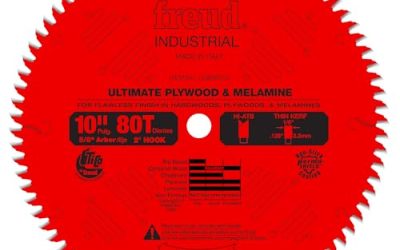
Freud LU80R010 10-Inch 80-Tooth Hi-ATB Finishing Blade

When the tabletop is the part everyone sees, this 80-tooth blade earns its place first. The Hi-ATB grind shears sassafras fibers instead of tearing them, so the top leaves the saw with an edge that needs only light sanding. The full kerf slot stays stable through long cuts, and the low 2-degree hook gives a slow, controlled feed that suits careful trimming. It is the slowest blade here for ripping, so keep it for finish work. Use it for the top, the apron faces, and any edge that shows after the finish goes on.
Specs
- 10-inch diameter, 80 Hi-ATB teeth
- 0.126-inch full kerf
- 2-degree hook angle
- Maximum speed 7,000 RPM
- TiCo carbide teeth with Perma-Shield coating
Best for: Tabletops and apron faces that need a nearly sanded edge straight from the saw.
Watch out for: The listing shows part number FRE-D1080X, so confirm the model LU80R010 and code B0007WKBEQ before ordering, and never use the Diablo D1080X in its place.
Diablo D1060X 10-Inch 60-Tooth Hi-ATB Finishing Blade

Sixty teeth hit the middle ground for a sassafras table. The Hi-ATB grind cuts clean crosscuts in soft boards, and the thin kerf lets a smaller saw move through leg stock without bogging down. Crosscuts on the apron come out smooth, and the 15-degree hook pulls the board through at a steady pace. It will not match the 80-tooth blade on a show face, but it handles the mix of rips and crosscuts in one table build better than any other blade here. Keep it mounted when you move between legs, aprons, and stretchers.
Specs
- 10-inch diameter, 60 Hi-ATB teeth
- 0.098-inch thin kerf
- 15-degree hook angle
- Maximum speed 7,000 RPM
- TiCo carbide teeth with Perma-Shield coating
Best for: Builders who rip and crosscut in the same session and want one blade for the whole table.
Watch out for: The 0.098-inch kerf may be thinner than a standard riving knife, so measure the knife with calipers before buying.
Freud LU88R010 10-Inch 60-Tooth ATB General Purpose Blade

This 60-tooth ATB blade is the steady everyday pick for sassafras. The ATB grind alternates the tooth bevel so each tooth shears one side of the cut, which keeps soft fibers from tearing across the grain. It rips leg stock cleanly and crosscuts apron boards without fuss, and the thin kerf keeps the saw from working hard on long boards. It does not leave quite the polished edge of the 80-tooth finishing blade, but it is the blade to reach for when the build mixes rough sizing and final cuts in the same afternoon.
Specs
- 10-inch diameter, 60 ATB teeth
- 0.090-inch thin kerf
- 0.071-inch plate thickness
- 15-degree hook angle
- TiCo carbide teeth with Perma-Shield coating
Best for: Everyday table building that mixes ripping leg stock and crosscutting apron boards.
Watch out for: The thin kerf may be narrower than a standard riving knife, so check the knife width first; the listing sometimes shows no featured offers, so confirm a seller is listed before ordering.
Diablo D1050X 10-Inch 50-Tooth ATB Combination Blade
Fifty teeth and a thin kerf make this the fastest ripper in the set. Long leg stock moves through the saw with little resistance, and the 15-degree hook keeps the feed steady without forcing the board. Crosscuts will look rougher than the 60-tooth blades leave, so save this blade for sizing stock and breaking down long boards before final trimming. It is the right call when the table needs four legs, two aprons, and a stretcher cut from the same soft boards in one session. Keep a finer blade nearby for the edges that show.
Specs
- 10-inch diameter, 50 ATB teeth
- 0.098-inch thin kerf
- 15-degree hook angle
- Maximum speed 6,000 RPM per the Amazon listing
- TiCo carbide teeth with Perma-Shield coating
Best for: Fast ripping of long leg and apron stock before final trimming.
Watch out for: Some retailers list 7,000 RPM, but the Amazon listing gives 6,000 RPM, so follow the listing number; the listing sometimes shows no featured offers, so confirm a seller is listed before ordering.
Freud LU83R010 10-Inch 50-Tooth ATB Flat-Bottom Grooving Blade
This is the only blade here that cuts a flat-bottom groove, and that makes it the joint blade of the set. The flat-top raker tooth levels the floor of each dado, so aprons sit flush and shelf boards seat without rocking. Fifty teeth still rip leg stock well, and the 10-degree hook feeds with more control than the 15-degree blades. It suits saws under 3 HP, so a small shop saw can run it without strain. If your sassafras table has a lower shelf or aprons joined with dadoes, this blade earns its place on the saw.
Specs
- 10-inch diameter, 50 ATB teeth plus flat-top raker
- 0.091-inch thin kerf
- 0.071-inch plate thickness
- 10-degree hook angle
- TiCo carbide teeth with Perma-Shield coating
Best for: Dadoes and grooves for aprons and lower shelves that must sit flat.
Watch out for: The thin kerf may be narrower than a standard riving knife, so measure first; the listing sometimes shows no featured offers, so confirm a seller is listed before ordering.
Which One Fits Your Situation
Building your first sassafras tabletop
Start with the Freud LU80R010. A first tabletop shows every tear and every sanding mark, and the 80-tooth Hi-ATB grind leaves the cleanest edge on soft sassafras. The slow feed feels forgiving while you learn to guide the board, and the full kerf slot stays stable through the long top cut. Pair it with the LU83R010 when you cut the apron grooves.
Ripping long leg stock in one session
Reach for the Diablo D1050X when the job is mostly ripping. Fifty teeth move through soft leg stock fast, and the thin kerf keeps a small saw from bogging down on long boards. Crosscuts will need a second pass with a finer blade, so keep the D1060X nearby for trimming the legs to length after the rips are done.
Cutting grooves for aprons and a lower shelf
Choose the Freud LU83R010 for any joint that needs a flat floor. Aprons joined with dadoes and a lower shelf set into grooves both sit flush only when the groove bottom is flat. The raker tooth does that in one pass, and the 10-degree hook keeps the feed controlled on soft sassafras. Use the LU80R010 for the tabletop itself.
Running a small saw under 3 HP
Pick the Freud LU88R010 or the LU83R010 when the saw is small. Thin kerf blades remove less wood, so a saw under 3 HP cuts without strain and stays cooler through long rips. The LU88R010 handles mixed ripping and crosscutting, while the LU83R010 adds flat-bottom grooves. Avoid the full kerf LU80R010 for heavy ripping on a small saw.
Common Mistakes
- Ripping a sassafras top with a 50-tooth blade and then sanding out the fuzzy edge for an hour. Use the 80-tooth blade for any edge that shows.
- Forgetting to measure the riving knife before fitting a thin kerf blade. A knife wider than the slot can jam the board mid-cut.
- Clamping soft sassafras without pads. Bare clamp jaws dent the surface, and the dents show through the finish.
- Cutting grooves with a standard ATB blade and expecting a flat floor. Only the raker tooth leaves a flat bottom for aprons and shelves.
- Pushing a dull blade through soft wood. Dull teeth crush fibers instead of shearing them, so the edge tears and the tabletop needs heavy sanding.
Frequently Asked Questions
How is a sassafras table different from a chestnut table?
Chestnut has coarse, open grain like oak and a warm brown color, and much of it comes as reclaimed wood with hidden nails. Sassafras is lighter and softer, with a sweet root beer scent when cut and coarser grain that still tears easily. Both need sharp, high-tooth blades, but sassafras dents more easily, so pad every clamp and sand lightly after cutting.
How is a sassafras table different from a poplar table?
Poplar is soft with faint, even grain and takes paint well, which makes it a common choice for painted tables. Sassafras has coarser grain, a light brown-yellow color, and a strong root beer scent when cut. Poplar holds screws a little better, while sassafras cuts more easily but dents faster. Both suit light tables, and both need sharp blades to avoid fuzzy edges.
Can one blade handle both ripping and crosscutting sassafras?
Yes, the 60-tooth blades in this list handle both jobs well enough for a single table build. The Diablo D1060X and the Freud LU88R010 rip leg stock cleanly and crosscut apron boards without heavy tear-out. Keep the 80-tooth blade for the tabletop face and the 50-tooth blade for long rips, and switch blades when the cut changes rather than forcing one blade to do everything.
Why does my sassafras tabletop dent so easily?
Sassafras is a soft, light wood, so it dents under clamps, dropped tools, and hard knocks that a harder wood would shrug off. Pad every clamp jaw, set tools down gently, and use a coaster or mat under heavy objects. A hard finish like polyurethane adds a thin shield, but it will not make soft wood hard, so handle the finished top with care.
More from Amazon
Programs that pair well with the guide above. Offers and eligibility are set by Amazon and may change.
A free business account with business pricing and bulk-buying tools for work, shop or home office.
Create a business accountFree shipping on eligible items, Prime Video and more. Eligible new members can start with a free trial.
Start a Prime free trialAudiobooks and podcasts to listen to on the go. Eligible new members can start with a free trial.
Try Audible freeAd-free music streaming. Eligible new subscribers can start with a free trial.
Try Music Unlimited freeAs an Amazon Associate we earn from qualifying purchases.








Write Your Review
No reviews yet. Be the first to share your experience!