

Our Top Picks


Cutting juniper for a table is a softer job than it looks. The wood is light and easy to feed, yet the small knots, resin pockets, and pink-red heartwood punish a dull or coarse blade with tear-out, burning, and fuzzy edges. The real decision is not which saw to use but which blade to mount: a fine-tooth blade that leaves a clean top surface, a mid-tooth blade for steady ripping, or a flat-top blade for the grooves that hold the legs. Pick wrong and the tabletop shows every mistake; pick right and juniper cuts like butter.
This guide is for weekend builders making a first juniper table, woodworkers who want a rustic top with knots left visible, and small-shop owners cutting legs and aprons on a saw under 3 HP. Every blade below was picked from the names and listed dimensions on its Amazon product page, so you can check each one before you order.
Quick Picks
As an Amazon Associate we earn from qualifying purchases.
| Product | Best for | Key spec from title |
|---|---|---|
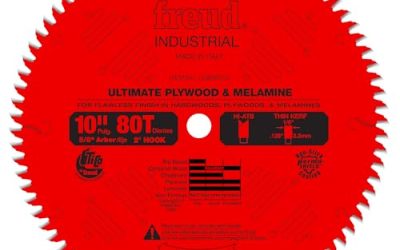
| Freud LU80R010 | Glass-smooth tabletops with visible pink-red grain | 10-inch, 80-tooth Hi-ATB |
| Diablo D1060X | Steady everyday rips and crosscuts in knotty boards | 10-inch, 60-tooth Hi-ATB |
| Freud LU88R010 | Clean cuts on a tight budget | 10-inch, 60-tooth ATB |
| Diablo D1050X | Fast ripping for legs and aprons | 10-inch, 50-tooth ATB |
| Freud LU83R010 | Flat-bottom grooves for leg joints | 10-inch, 50-tooth ATB with flat-top raker |
How to Choose
Tooth Count and Grind
Juniper is soft, so tooth count matters more than raw power. An 80-tooth Hi-ATB blade slices the pink-red heartwood cleanly and leaves a top surface that needs little sanding, which matters when the grain is the whole point of the table. A 60-tooth blade is the workhorse: fast enough for ripping long boards, fine enough for crosscuts that stay smooth. Drop to 50 teeth only for rough work or thick legs, because fewer teeth leave a rougher edge in soft wood. Whatever you pick, keep the blade sharp; a dull edge crushes soft fibers instead of cutting them, and the fuzzy surface it leaves soaks up finish unevenly.
Kerf Width and the Riving Knife
Kerf is the width of the cut, and it decides whether your riving knife still fits. Full kerf blades cut a 0.126-inch slot that matches most standard splitters, while thin kerf blades cut slots as narrow as 0.090 inch. A thin slot saves wood and eases the load on a small saw, but a standard riving knife can be thicker than the slot, which binds the board and risks kickback. Measure the knife with calipers before you buy, and match the blade to it. Juniper is light and soft, so feed pressure stays low either way, but a blade that matches the splitter keeps every cut straight and safe.
Grooves and Joints for Legs and Aprons
A table is more than a top, and the joints decide whether it wobbles in a year. Legs and aprons need flat-bottom grooves and dadoes that seat squarely, and only a flat-top raker tooth cuts a truly flat bottom. ATB teeth leave a V-shaped ridge in the middle of the groove, so a leg tenon rocks instead of seating. If your design uses mortise and tenon joints, plan for one flat-top blade in the set, even if it cuts slower than the rest. Cut grooves in two shallow passes rather than one deep pass: juniper is soft enough to cut fast, but a deep pass in knotty stock can grab and burn.
Resin, Dust, and Blade Care
Juniper smells of resin, and that resin sticks to blades. A coated blade sheds pitch better than a bare steel plate, and a quick wipe with a pitch remover after each session keeps the teeth cutting clean. The dust is fine and aromatic, so wear a mask and connect dust collection when you can; aromatic dust can irritate noses and lungs in a closed shop. Knots are the other trouble spot: they are harder than the surrounding wood and can chip a tooth if you force the feed. Slow down before each knot, let the blade do the work, and check the teeth for damage after the cut.
The 5 Best Options
Freud LU80R010

The LU80R010 is the blade to mount when the tabletop is the star. Eighty Hi-ATB teeth shear the soft pink-red heartwood instead of tearing it, so the surface comes off the saw nearly ready for finish, with little sanding needed. That matters for juniper, where the grain and the small knots are the decoration. The full 0.126-inch kerf matches a standard riving knife, and the 2-degree hook angle keeps the cut calm and controlled. It is the slowest blade in this set, but for a top that guests will touch, the smooth result is worth the extra passes.
Specs
- 10-inch diameter, 80 teeth, Hi-ATB grind
- 0.126-inch full kerf, 2-degree hook angle
- TiCo carbide teeth with Perma-Shield coating
- Maximum RPM 7,000
Best for: A showpiece juniper tabletop where the grain stays visible.
Watch out for: The listing shows part number FRE-D1080X, so confirm model LU80R010 and ASIN B0007WKBEQ before ordering; never buy the Diablo D1080X by mistake.
Diablo D1060X

The D1060X is the everyday blade for a juniper table build. Sixty Hi-ATB teeth balance speed and smoothness: it rips long boards without bogging down and crosscuts cleanly enough that the edges need only a light touch of sandpaper. The thin 0.098-inch kerf eases the load on a small saw and wastes less of a costly board, which helps when juniper stock is short and knotty. It handles the small knots well as long as you slow the feed before each one. For builders who want one blade that does most of the job, this is the pick to mount first.
Specs
- 10-inch diameter, 60 teeth, Hi-ATB grind
- 0.098-inch thin kerf, 15-degree hook angle
- TiCo carbide teeth with Perma-Shield coating
- Maximum RPM 7,000
Best for: Everyday ripping and crosscutting across a whole juniper table build.
Watch out for: The 0.098-inch kerf may be thinner than a standard riving knife, so measure the knife with calipers before ordering.
Freud LU88R010

The LU88R010 gives up a little smoothness to save money, and for juniper that trade often makes sense. Sixty ATB teeth cut cleanly through soft boards, and the thin 0.090-inch kerf keeps the load light on saws under 3 HP. Crosscuts stay neat, and rip cuts need only light sanding before glue-up. It is a good second blade for builders who already own a fine finish blade and want a cheaper daily cutter for legs, aprons, and stretchers. The Perma-Shield coating helps with the resin, though a wipe-down after each session still pays off.
Specs
- 10-inch diameter, 60 teeth, ATB grind
- 0.090-inch thin kerf, 0.071-inch plate, 15-degree hook angle
- TiCo carbide teeth with Perma-Shield coating
Best for: Budget-conscious builders who need a clean daily cutter for legs and aprons.
Watch out for: The listing sometimes shows no featured offers in older crawls, so confirm a seller is present before ordering.
Diablo D1050X
The D1050X is the fast ripper of the set. Fifty ATB teeth clear soft juniper quickly, so long rips for legs and aprons move along without the saw laboring. The 0.098-inch thin kerf wastes little wood, and the 15-degree hook angle pulls the board through steadily. Edges come off a touch rougher than the 60-tooth blades leave, so plan on a pass with sandpaper before glue-up. It shines on thick leg stock and long apron boards, where speed matters more than a glass-smooth edge, and it pairs well with a finer blade for the top.
Specs
- 10-inch diameter, 50 teeth, ATB grind
- 0.098-inch thin kerf, 15-degree hook angle
- TiCo carbide teeth with Perma-Shield coating
- Maximum RPM 6,000 per the Amazon listing
Best for: Fast ripping of thick leg stock and long apron boards.
Watch out for: Some retailers list 7,000 RPM, but the Amazon listing states 6,000, so follow the listing number; also confirm a seller is present before ordering.
Freud LU83R010
The LU83R010 earns its place with one job no other blade here does: flat-bottom grooves. Its flat-top raker tooth cuts dadoes and grooves with a truly flat floor, so leg tenons and apron joints seat squarely instead of rocking on a ridge. Fifty ATB teeth plus the raker handle ripping and crosscutting in soft juniper, and the thin 0.091-inch kerf suits saws under 3 HP. It is the slowest finisher of the group, but a table that stands square for years starts with joints cut right, and this is the blade that cuts them.
Specs
- 10-inch diameter, 50 teeth, ATB grind with flat-top raker
- 0.091-inch thin kerf, 0.071-inch plate, 10-degree hook angle
- TiCo carbide teeth with Perma-Shield coating
- For saws under 3 HP; only blade here that cuts flat-bottom grooves
Best for: Flat-bottom grooves and dadoes for legs, aprons, and stretchers.
Watch out for: The listing sometimes shows no featured offers in older crawls, so confirm a seller is present before ordering.
Which One Fits Your Situation
A Showpiece Top With Visible Grain
Mount the LU80R010 when the tabletop is the reason for the project. Its 80 Hi-ATB teeth leave the pink-red heartwood smooth enough for finish with little sanding, and the small knots stay crisp instead of tearing out. Pair it with the LU83R010 for the grooves underneath, and keep the D1060X nearby for the long rip cuts that feed the top.
A Rustic Table With Knots Left In
Choose the D1060X for a rustic table where knots stay part of the look. Its 60 Hi-ATB teeth cut around small knots cleanly if you slow the feed before each one, and the thin kerf wastes little of a short board. Keep a pitch remover handy, since knots hold the most resin, and sand lightly so the knot faces stay smooth under finish.
Sturdy Legs and Aprons With Strong Joints
Pick the LU83R010 first when the frame matters most. Its flat-top raker cuts flat-bottom grooves that let leg tenons seat squarely, so the table stays steady for years. Use the D1050X for ripping the thick leg stock fast, then switch to the LU83R010 for every groove and dado. The two together cover a whole frame without a second saw setup.
A Small Shop With a Saw Under 3 HP
Go with the LU88R010 or the LU83R010 when the saw is small. Both use thin kerfs that ease the load on a motor under 3 HP, and both cut soft juniper cleanly without bogging down. The LU88R010 handles daily crosscuts and rips, while the LU83R010 adds the flat-bottom grooves. Skip the full kerf LU80R010 for heavy ripping here, and save it for the final top.
Common Mistakes
- Mounting a thin kerf blade without checking the riving knife thickness first; a knife thicker than the slot binds the board.
- Forcing the feed through knots instead of slowing down, which chips teeth and burns the wood.
- Cutting deep grooves in one pass instead of two shallow passes, which grabs knotty stock.
- Skipping the mask and dust collection; juniper dust is fine and aromatic and can irritate noses and lungs.
- Confusing the Freud LU80R010 with the Diablo D1080X; the listing shows part number FRE-D1080X, so confirm model and ASIN before ordering.
Frequently Asked Questions
How is a juniper table different from a cedar table?
Cedar smells stronger and shows an even red-brown color across the board, while juniper has a pink-red heartwood with paler grain and smaller knots. Cedar is also a touch harder and more stable in damp rooms. Juniper suits a light, aromatic indoor table, while cedar fits outdoor or humid spots better. Both cut well with the same 60-tooth blades.
How is a juniper table different from a cypress table?
Cypress smells mild, carries many small knots, and resists pests thanks to its natural oils, while juniper is softer, lighter, and shows a pink-red heartwood that stands out more. Cypress holds up better in damp spots, while juniper is best indoors where its aroma and color show. Both need sharp blades and slow feeds through knots.
Why does juniper crack, and how do I stop it?
Juniper cracks when it dries too fast, because the soft wood shrinks unevenly around knots and resin pockets. Buy boards that were dried slowly, store them flat indoors for a few weeks before cutting, and seal the end grain right after each cut. Avoid building with green or wet stock, and keep the finished table out of dry, heated air.
Do I need a special blade for juniper, or will any 10-inch blade work?
Any sharp 10-inch blade cuts juniper, but the right blade saves sanding and keeps the grain crisp. A 60-tooth blade covers most of the build, an 80-tooth blade gives the smoothest top, and a flat-top blade cuts the grooves that hold the legs. A dull or coarse blade tears soft fibers and leaves a fuzzy surface, so sharpness matters more than brand.
More from Amazon
Programs that pair well with the guide above. Offers and eligibility are set by Amazon and may change.
A free business account with business pricing and bulk-buying tools for work, shop or home office.
Create a business accountFree shipping on eligible items, Prime Video and more. Eligible new members can start with a free trial.
Start a Prime free trialAudiobooks and podcasts to listen to on the go. Eligible new members can start with a free trial.
Try Audible freeAd-free music streaming. Eligible new subscribers can start with a free trial.
Try Music Unlimited freeAs an Amazon Associate we earn from qualifying purchases.








Write Your Review
No reviews yet. Be the first to share your experience!