

Our Top Picks


A black locust table looks simple until the saw meets the wood. Black locust is dense, heavy, and hard enough to dull a tired blade mid-board, and a slow or dull cut leaves dark burn marks on the pale green-yellow face that sanding hides poorly. The real decision is not which saw to buy but which blade stays sharp through hard stock, rips thick legs without scorching the edge, and cuts flat-bottom grooves for joints that last. Pick the wrong blade and the top shows brown streaks.
This guide is for home woodworkers building a sturdy black locust side table, coffee table, or outdoor accent table, for makers who want a hard, rot-resistant top, and for first-time cutters wondering why the edges come out scorched. The five blades below were chosen from the names and specs on their Amazon product pages, so you can match each one to a step of the build.
Quick Picks
As an Amazon Associate we earn from qualifying purchases.
| Product | Best for | Key spec from title |
|---|---|---|
| Freud LU80R010 | Burn-free black locust tops | 10-inch 80-tooth Hi-ATB |
| Diablo D1060X | Square crosscuts on aprons and rails | 10-inch 60-tooth Hi-ATB |
| Freud LU88R010 | One blade for most table parts | 10-inch 60-tooth ATB |
| Diablo D1050X | Steady rips for thick legs | 10-inch 50-tooth ATB |
| Freud LU83R010 | Flat-bottom grooves and leg joints | 10-inch 50-tooth with raker |
How to Choose
Hardness and Tooth Wear
Black locust is one of the hardest domestic woods a home saw will meet, so tooth wear decides the result. A carbide-tipped blade with many teeth spreads the work across more cutting points, and each tooth takes a smaller bite, which keeps the edge cooler and the cut cleaner. A dull steel blade drags through the dense grain, heats up, and leaves brown burn marks along the edge. Check the teeth before every session and retire a blade that has lost its edge. Sharp carbide is the single best defense against scorch on black locust.
Kerf and Riving Knife
Kerf is the width of the slot the blade cuts, and it matters twice on a black locust table. A thin kerf blade removes less of the hard wood, so a small saw strains less and the motor stays cooler through long rips in thick leg stock. A full kerf blade runs steadier and resists wobble on wide top boards. Before you buy, measure your riving knife with calipers and compare it with the kerf. A thin kerf blade can be thinner than a standard riving knife, and a knife that is wider than the slot will bind the board mid-cut. Check the numbers first, then choose the kerf that fits your saw.
Flat-Bottom Grooves
A black locust table needs grooves that hold parts square: leg joints, apron dados, and channels under the top for a lower shelf. Most ATB blades leave a V-shaped ridge at the bottom of a groove because the teeth meet at an angle, so a tenon seated in that groove rocks instead of sitting flat. A blade with a flat-top raker tooth cuts a level floor, so joints close tight and shelves sit without wobble. If your table plan has any dado or groove, keep one raker blade in the set. A clean flat groove saves more time at assembly than any other single blade choice.
Cutting Black Locust Without Burn Marks
Burn marks appear when the blade rubs instead of cutting, which happens with a dull edge, a feed that is too slow, or a fence that pinches the board against the blade. The dark streaks sink into the hard face and take deep sanding to remove, and deep sanding can thin a leg or round over a joint edge. Use a sharp carbide blade, feed the board at a steady, even pace, and keep the fence parallel so the offcut does not press the blade. Black locust also rewards a clean saw: pitch and dust on the plate add friction, so wipe the blade after a long session.
The 5 Best Options
Freud LU80R010

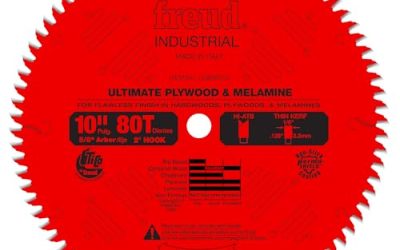
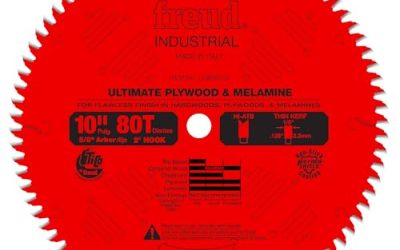
The LU80R010 is the blade for the part of the table everyone sees. Its 80 Hi-ATB teeth take small, clean bites, so a black locust top comes off the saw with a surface that feels smooth to the touch and shows no brown scorch along the cut. The full kerf body runs steady through wide, dense boards, which helps when you are joining top panels that must stay flat. It is the slowest of the five for ripping, so save it for crosscuts and top work and let a coarser blade handle the legs.
Specs
- 10-inch diameter, 80 teeth, Hi-ATB grind
- 0.126-inch full kerf
- 2-degree hook angle
- 7,000 max RPM
- TiCo Hi-Density carbide teeth
- Perma-Shield non-stick coating
Best for: Black locust table tops that need a burn-free cut with little sanding.
Watch out for: The Amazon listing shows part number FRE-D1080X, so confirm the model is LU80R010 and the ASIN is B0007WKBEQ before ordering. Do not confuse it with the Diablo D1080X, which is a different blade.
Diablo D1060X

The D1060X is the crosscut blade for aprons, rails, and stretchers that must meet square. Its 60 Hi-ATB teeth cut clean ends on black locust without tearing the dense face, and the thin kerf keeps a smaller saw from bogging down on repeated cuts. It handles the parts that frame the table, where a square shoulder matters more than a polished face. Use it when you have many identical pieces to cut and want each one to match the last.
Specs
- 10-inch diameter, 60 teeth, Hi-ATB grind
- 0.098-inch kerf
- 15-degree hook angle
- 7,000 max RPM
- TiCo Hi-Density carbide teeth
- Perma-Shield non-stick coating
Best for: Clean crosscuts on aprons, rails, and stretchers that must join square.
Watch out for: The 0.098-inch kerf can be thinner than a standard riving knife, so measure your knife with calipers before you buy. Confirm the listing still has a seller before ordering.
Freud LU88R010

The LU88R010 is the general-purpose blade that can build most of a black locust table on its own. Its 60 ATB teeth are fine enough for a decent top cut and coarse enough to rip thick legs without crawling, so a small shop with one blade slot gets the most use from this one. The thin kerf eases the load on saws under 3 HP, and the ATB grind leaves edges that glue up clean after a quick pass with sandpaper. It is the safe pick when you want one blade for the whole project.
Specs
- 10-inch diameter, 60 teeth, ATB grind
- 0.090-inch kerf
- 0.071-inch plate thickness
- 15-degree hook angle
- TiCo Hi-Density carbide teeth
- Perma-Shield non-stick coating
Best for: Builders who want one blade for the top, legs, and aprons of a black locust table.
Watch out for: The 0.090-inch kerf is thinner than many standard riving knives, so measure your knife first. This blade does not cut flat-bottom grooves, so add a raker blade for dados.
Diablo D1050X
The D1050X is the ripping blade for legs, stretchers, and apron stock. Its 50 ATB teeth clear black locust fast, so long rips stay straight and the motor does not labor through thick boards. The edge it leaves is rougher than a fine blade, so plan on sanding or jointing the faces that show. It is the workhorse of the set, and it earns its place on every table build that starts with rough-sawn black locust boards.
Specs
- 10-inch diameter, 50 teeth, ATB grind
- 0.098-inch kerf
- 15-degree hook angle
- 6,000 max RPM per the Amazon listing
- TiCo Hi-Density carbide teeth
- Perma-Shield non-stick coating
Best for: Fast rips through black locust legs and stretchers without straining the saw.
Watch out for: The Amazon listing gives 6,000 max RPM while some retailers list 7,000, so follow the listing number and confirm the listing still has a seller before ordering. The thin kerf may be thinner than a standard riving knife, so measure first.
Freud LU83R010
The LU83R010 is the only blade in this set that cuts a flat-bottom groove, which makes it the joint blade for a black locust table. Its flat-top raker tooth levels the floor of each dado, so leg tenons seat fully and shelf channels hold boards without rocking. The 50 ATB teeth still rip well enough for apron stock, and the 10-degree hook angle feeds smoothly on saws under 3 HP. Keep it on the saw whenever the plan calls for a groove, a dado, or a channel.
Specs
- 10-inch diameter, 50 teeth, ATB with flat-top raker
- 0.091-inch kerf
- 0.071-inch plate thickness
- 10-degree hook angle
- For saws under 3 HP
- TiCo Hi-Density carbide teeth
- Perma-Shield non-stick coating
Best for: Flat-bottom grooves, dados, and leg joints that must sit tight and square.
Watch out for: The 0.091-inch kerf can be thinner than a standard riving knife, so measure your knife with calipers before you buy. Confirm the listing still has a seller before ordering.
Which One Fits Your Situation
A Hard Top With No Burn Marks
Pick the Freud LU80R010 when the top is the showpiece and you want the saw to do most of the smoothing. Its 80 Hi-ATB teeth leave a black locust surface that needs only a light pass with fine sandpaper before the finish goes on. The full kerf body stays steady across wide boards, so the top stays flat. Save this blade for the visible work and rip the legs with a coarser blade.
Ripping Thick Legs in a Small Shop
Pick the Freud LU88R010 or the Diablo D1050X when your saw is small and the job is mostly ripping thick leg stock. The thin kerf asks less of the motor, and the 50 to 60 teeth clear black locust fast enough to keep long rips straight. Sand the edges that show and let the hidden faces stay rough. Both blades handle the structural parts of a black locust table without slowing the build.
Grooves and Joints That Must Fit Tight
Pick the Freud LU83R010 when the plan has leg joints, apron dados, or a channel for a lower shelf. Only its flat-top raker cuts a level groove floor, so tenons seat fully and shelves sit without rocking. A V-bottom groove from a plain ATB blade leaves a gap that weakens the joint. Use this blade for every groove, then switch back to a fine blade for the top.
One Blade for the Whole Table
Pick the Freud LU88R010 when you want a single blade to build the entire black locust table. Its 60 ATB teeth crosscut cleanly enough for the top and rip fast enough for the legs, so you never change blades mid-project. The result needs a bit more sanding than a dedicated fine blade gives, but the build stays simple. Add the LU83R010 later only if the plan needs flat-bottom grooves.
Common Mistakes
- Cutting black locust with a dull blade, which rubs instead of slicing and leaves dark burn marks that take deep sanding to remove.
- Feeding the board too slowly through hard stock, which lets the teeth linger and scorch the edge.
- Buying a thin kerf blade without measuring the riving knife, which can bind the board mid-cut.
- Skipping a finish on a black locust table, since the fresh green-yellow face darkens unevenly in sunlight without a UV-blocking coat.
- Forgetting to measure the doorway and the free space in the room before carrying the finished table inside.
Frequently Asked Questions
How does a black locust table compare with a hickory table?
Both woods are very hard and heavy, but hickory has bold streaks and a lively grain, while black locust has a straighter grain and a green-yellow face that darkens to golden brown. Hickory suits a work surface, and black locust resists rot better, which suits a table near damp or outdoors. The same five blades cut both woods well, though black locust scorches more easily with a dull blade.
How does a black locust table compare with an oak table?
Both woods are hard and durable, but oak has a coarse, open grain with visible pores, while black locust has a finer, denser grain and a heavier feel. Oak takes stain evenly and suits a classic look, and black locust holds up better against damp and decay. A black locust top also starts green-yellow and darkens with light, while oak keeps a steadier brown tone.
Why do black locust edges come out burned?
Black locust is so dense that a dull blade or a slow feed lets the teeth rub and heat the wood instead of slicing it. The fix is a sharp carbide blade, a steady feed, and a parallel fence so the board does not pinch the blade. Wipe the plate clean after a long session, since a dirty blade adds friction. Sharp teeth and a steady hand keep edges pale.
Can a black locust table sit outdoors?
Yes, black locust is one of the most rot-resistant domestic woods, so a table built from it holds up far better outdoors than pine or poplar. The joints still need a waterproof glue and the whole table needs an outdoor finish with UV protection, since sun darkens the face unevenly and rain swells the end grain. Keep the feet off wet ground and re-oil the top each year.
More from Amazon
Programs that pair well with the guide above. Offers and eligibility are set by Amazon and may change.
A free business account with business pricing and bulk-buying tools for work, shop or home office.
Create a business accountFree shipping on eligible items, Prime Video and more. Eligible new members can start with a free trial.
Start a Prime free trialAudiobooks and podcasts to listen to on the go. Eligible new members can start with a free trial.
Try Audible freeAd-free music streaming. Eligible new subscribers can start with a free trial.
Try Music Unlimited freeAs an Amazon Associate we earn from qualifying purchases.








Write Your Review
No reviews yet. Be the first to share your experience!