

Key takeaways
- A pawl and splitter reset day for the table saw: five refresh picks for hex adjustments, wiring staples, blade cleaning, and a fresh vac bag.
The anti-kickback pawls on a table saw do their quiet work only when they can move. Each pawl has to swing on its pin, drop onto the workpiece, and bite when the board tries to lift, and that movement is exactly what a season of pitch, resin, and fine dust takes away. Pawls get gummed at the pivot, the splitter drifts a hair off the blade line after a guard removal, and the guard starts to hesitate instead of dropping cleanly. None of that shows up during a quick glance around the shop, so it waits until the middle of a project, the worst time to deal with it.
A dedicated pawl check and reset day, scheduled before the next project starts, is a calmer way to handle it. The routine is simple: clean the pawls and splitter, confirm each pawl swings and settles freely, check the splitter alignment against the blade, run the guard through its full lift and drop, and finish with the cleanup. The five picks below are the supporting kit for that day. None of them is a guard, a pawl, or a splitter, and none replaces a worn part. They cover the hex adjustments, the loose bench wiring, the cleaning bottles, and the vacuum bag.
As an Amazon Associate, we earn from qualifying purchases.
Quick Answer
Start with the saw unplugged and the blade lowered. Work the pawls by hand until each one swings and drops freely, confirm the splitter sits in line with the blade, and lift and lower the guard to check for sticking. The five picks below cover the hex adjustments, wiring staples, cleaning bottles, and the fresh vac bag for the cleanup.
toolant Impact Allen Wrench Drill Bit Set, 20-Piece Metric and SAE, 2-Inch

Most fasteners touched on a pawl check day are socket head screws. Guard mounts, splitter clamps, pawl pivot hardware on many saws, and fence locks commonly use hex sockets, in two sizing systems depending on where the saw was made. A combined Metric and SAE Allen bit set keeps the day moving, because the alternative is a drawer of loose L-keys and a pause every time a fastener turns out to be the other system. Driver-run bits also speed up the repeated loosen, adjust, and snug cycle when the splitter needs several small corrections.
For this routine, the set earns its place in three spots. It backs out the guard assembly hardware so the pawls can be cleaned at the bench instead of over the saw. It handles the splitter clamp bolts while alignment is checked against a straightedge laid along the blade. And it covers the small hex screws on fence hardware worth snugging while the saw is apart. Anyone whose saw uses mostly slotted or Phillips hardware will get less from it, and the listing is the place to confirm the size range included.
Specs
- Set size: 20 pieces
- Sizing systems: Metric and SAE
- Bit length: 2 inches, per the product name
- Format: Allen wrench style drill bits, impact rated per the product name
- Exact sizes and shank type: confirm on the listing
Arrow 259 T25 Staples for Installing Low Voltage Wires and Cables, 1100 Count

A guard reset day involves moving things around the saw, and that is when the low-voltage wiring along the bench gets noticed. Blast gate controls, remote switch leads, and sensor cables often run along the bench edge or saw stand, secured at intervals. When a run sags or was routed in a hurry during an earlier project, it ends up near belts, feet, and offcuts. Re-securing those runs belongs on a reset day, because the saw is already stopped and unplugged.
These staples are made for that specific task. The T25 format is shaped for fastening low-voltage wire and cable runs, a better match for control and sensor leads than a general-purpose staple never shaped around a cable. A count of 1100 means a full re-route around one saw station uses a small fraction of the box. The honest limits matter: these staples are for low-voltage wiring only, not line-voltage circuits, and the staple tool they fit is a separate item, so confirm which stapler models the T25 size suits on the listing.
Specs
- Staple type: 259 T25
- Intended use: installing low-voltage wires and cables, per the product name
- Count: 1100 staples per box
- Compatible staple tools, crown width, and leg length: confirm on the listing
Hydior Frosted Glass Spray Bottle, 2 Pack

Cleaning is the step that makes the pawl check possible. Pitch and resin build up on the pawls, the splitter faces, and the blade, and a pawl coated in hardened pitch cannot swing the way it should. The usual approach is to spray cleaning solution onto the part or a rag, let it sit briefly, and work the buildup loose with a brush. That calls for a spray bottle that lives at the saw full time, filled with blade and bit cleaner, instead of a borrowed household bottle that wanders off.
A two pack suits the routine well. One bottle holds the cleaner for the pawl, splitter, and blade work, and the second holds plain water for the rinse wipe, so the two steps never share a container. Frosted glass suits a stationary bench bottle and takes an outside label easily, though glass does ask for a stable shelf spot rather than a crowded bench edge. Nozzle type, spray pattern, and capacity are not stated in the product name, so confirm those details on the listing.
Specs
- Pack size: 2 bottles
- Material: frosted glass, per the product name
- Intended role here: cleaning solution, plus a rinse bottle
- Capacity, nozzle, and spray style: confirm on the listing
RELANOR Small Spray Bottle 2 oz 2 Pack
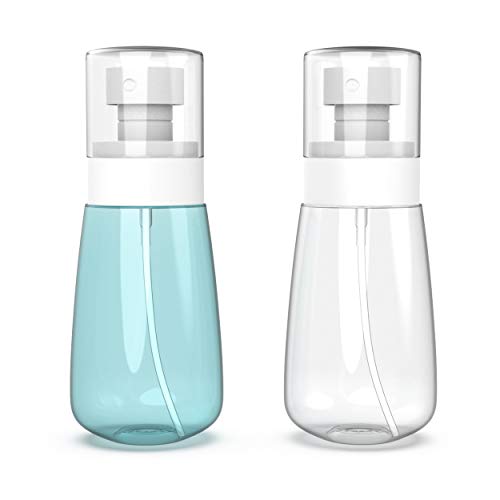
Not every liquid job on a reset day needs a full-size bottle. After the pawls are clean and swinging freely, the pivot points and guard linkage get a small amount of the lubricant the saw maker recommends, applied sparingly and wiped back. A large spray bottle is clumsy for that targeted work, and it tends to put liquid where it does not belong, including the blade and table surface. Small bottles are the better tool for the detail end of the routine.
At 2 ounces each, these bottles fit that detail role. One can hold the pivot lubricant for the pawl pins and guard linkage, and the second a small amount of solvent for spot-cleaning a single pawl or a stubborn patch of pitch. They also store easily in the saw station drawer with the Allen bits, so the reset kit stays together between uses. The limits are clear: 2 ounces runs out quickly if asked to do the main cleaning, which is why this set pairs with the larger bottles above. Material, nozzle style, and spray pattern are not stated in the product name, so confirm those points on the listing.
Specs
- Pack size: 2 bottles
- Capacity: 2 ounces each, per the product name
- Intended role here: small-amount lubricant and spot-cleaning solvent
- Material, nozzle style, and spray pattern: confirm on the listing
ALYYDBG Shop Vac Bags 5 Pack Type A

The reset day ends the way most saw work ends, with dust spread wider than expected. Brushing out the guard housing and vacuuming the stand and floor push fine dust into the shop vacuum, and a bag already near full loses suction right when the cleanup needs it most. Swapping in a fresh bag before the cleanup starts is a two-minute job that keeps the vacuum pulling properly through the whole reset, including the dust settled inside the cabinet.
A five pack fits the rhythm of a working shop. One bag goes in for the reset day, and the rest cover the next several deep cleanings. The important check is fit. These bags are described as Type A, and shop vacuums vary, so confirm the compatible models and dimensions on the listing against the vacuum in the shop before ordering. A bag that almost fits is not a saving; it leaks dust into the vacuum and shortens the life of the filter behind it. Bagless setups should skip this pick entirely.
Specs
- Pack size: 5 bags
- Bag type: Type A, per the product name
- Intended role here: fresh bag fitted before the reset day cleanup
- Compatible models, dimensions, and capacity: confirm on the listing
How to Choose
Start with the fasteners. Check which hex sizes the guard mount, splitter clamp, and fence hardware use, and whether they are Metric, SAE, or a mix, because that decides whether a combined Allen bit set is the right centerpiece. Saws with mostly Phillips or slotted hardware need a different driver set, and no kit helps if its sizes stop short of the splitter bolts.
Next, match the bottles to the two liquid jobs. The main cleaning step wants a full-size spray bottle that stays filled with blade cleaner at the saw, while the detail step wants small bottles that put a little lubricant or solvent in one exact spot. Choosing both sizes is not duplication; they do different work. For the wiring, confirm the staples fit a stapler already in the shop, and for the vacuum, confirm the bag type against the actual machine. Checking those fit questions on the listings first is what turns a reset day into a routine instead of a second project.
Who Should Skip
Skip this kit if the pawls on the saw are bent, cracked, or missing teeth. Cleaning and adjustment cannot restore damaged hardware, and a pawl that no longer drops and grips the way it was made needs replacement parts from the saw maker, not a refresh day. The same applies to a bent splitter or a guard with cracked housing; those are parts orders, not adjustments.
Also skip it if the saw uses a guard system with no separate pawls, since the centerpiece checks here will not apply, and skip individual picks that do not match the shop. A bagless vacuum gains nothing from vac bags, and a bench with no low-voltage runs gains nothing from cable staples. Anyone following the saw maker’s full service procedure should gather the tools that manual calls for first; this kit supports a general check and clean, not the manual.
FAQ
How often should the pawls and splitter be checked?
Check them at the start of each new project and after any guard removal, since refitting the guard is when alignment changes. Shops cutting pitch-heavy softwood may want the cleaning step more often, because buildup on the pivots slows pawl movement.
What does a pawl check actually involve?
With the saw unplugged, each pawl is moved by hand to confirm it swings on its pin without sticking and drops back under its own weight. The splitter is checked for alignment with the blade, the guard is lifted and lowered through its full travel, and any pitch or packed dust found along the way is cleaned off before reassembly.
Can a cleaning and adjustment day fix a pawl that sticks?
It fixes the common cause, pitch and dust packed around the pivot. If a pawl still sticks after a thorough cleaning, or the spring or pin is worn or damaged, the part itself is the problem, and the right move is a replacement from the saw maker rather than more cleaning.
Why does the vacuum bag matter for a guard check?
The check stirs up fine dust from the guard housing, cabinet, and bench area. A shop vacuum with a fresh bag keeps its suction through the cleanup and traps that dust in the bag instead of clogging the filter behind a full one.
Final Verdict
A pawl check day is unglamorous work, and that is exactly why it gets postponed. The five picks here remove the small frictions behind the postponement: the Allen bit set covers the guard, splitter, and fence fasteners in both sizing systems, the T25 staples tidy the low-voltage runs while the saw is apart, the two bottle sizes split the cleaning and detail liquid jobs, and the fresh vac bags keep the cleanup from becoming a second chore. None of it replaces a damaged pawl, splitter, or guard, and every fit detail still needs a quick confirmation on its listing. For a saw whose hardware is sound but gummed and overdue, this kit makes the reset a short, repeatable routine.
More from Amazon
Programs that pair well with the guide above. Offers and eligibility are set by Amazon and may change.
A free business account with business pricing and bulk-buying tools for work, shop or home office.
Create a business accountFree shipping on eligible items, Prime Video and more. Eligible new members can start with a free trial.
Start a Prime free trialAudiobooks and podcasts to listen to on the go. Eligible new members can start with a free trial.
Try Audible freeAd-free music streaming. Eligible new subscribers can start with a free trial.
Try Music Unlimited freeAs an Amazon Associate we earn from qualifying purchases.


Write Your Review
No reviews yet. Be the first to share your experience!