

Key takeaways
- Audit a push block station with hex bits for hardware checks, a honing rod, low-voltage staples, shop vac bags, and spray bottles for cleanup.
Push blocks, grippers, and featherboards do their best work when the station around them is in order. Handles loosen a quarter turn at a time, grip pads collect a film of dust and resin, the bench knife that trims a worn block goes dull, and the low-voltage cable for the station light slowly migrates toward the blade path. None of that shows up mid-cut as a dramatic failure. It shows up as a block that feels slightly less planted than it did last season.
An audit refresh is the scheduled pause that catches those small drifts. It is not a shopping spree and it is not a rebuild. It is a walk around the saw station with a short checklist: tighten every fastener on the push tools, clean every gripping surface, touch up the bench knife, re-secure the wiring, and clear the dust that hides problems. The five picks below support exactly that routine.
As an Amazon Associate, we earn from qualifying purchases.
Quick answer
For a push block station audit, start with the toolant Impact Allen Wrench Drill Bit Set for the handle and accessory hardware, keep the 12-Inch Knife Sharpening Rod nearby for the bench knife, use Arrow 259 T25 Staples to re-secure low-voltage station wiring, fit ALYYDBG Shop Vac Bags for the cleanup pass, and finish with the Hydior Frosted Glass Spray Bottle for grip surfaces.
toolant Impact Allen Wrench Drill Bit Set, 20-Piece Metric & SAE, 2-Inch

Most push block hardware speaks hex. Handle bolts on grippers, leg screws on adjustable push blocks, clamp knobs on featherboards, and a good share of the fence and miter gauge fittings around the station all take Allen keys. During an audit, every one of those fasteners gets a check, and a bit set that covers both metric and SAE sizes in one case ends the hunt for the one loose key that rolled under the bench.
This toolant set pairs with an impact driver or a standard drill chuck, which speeds up the audit without encouraging over-tightening. The sensible routine is to run fasteners down gently with the driver, then finish by hand feel so plastic handles and threaded inserts are not stressed. A fastener that spins freely or will not snug is a finding, not a nuisance: it marks a push tool that needs repair or retirement before the next rip session.
Specs
- Set size: 20 pieces
- Sizing: metric and SAE hex sizes included
- Bit length: 2 inches
- Format: drill and impact driver bits
- Exact size range in each system: confirm on the listing
- Case style and markings: confirm on the listing
12-Inch Knife Sharpening Rod
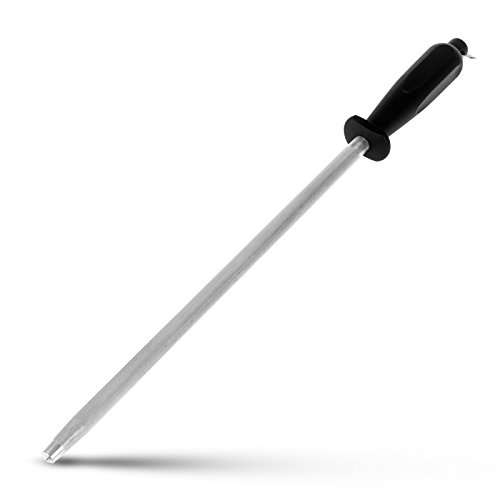
A push block station keeps a bench knife busy. It trims frayed edges on shop-made blocks, scrapes dried glue off grip pads, opens packaging, and scores layout lines. A dull bench knife tears instead of slicing, and a torn grip pad surface is exactly what an audit is meant to catch and correct. The knife therefore gets its own line on the checklist, and it needs a honing tool within reach.
A 12-inch sharpening rod suits that role. The length gives long, controlled strokes for touch-ups between full sharpening sessions, restoring a working edge on the bench knife and on the utility blades used around the station. A rod hones rather than grinds, so it belongs in the maintenance column of the audit: a few light passes during the refresh, and the knife goes back to trimming blocks cleanly instead of chewing them.
Specs
- Rod length: 12 inches
- Type: knife sharpening and honing rod
- Intended use: edge touch-ups on straight blades
- Grit rating: confirm on the listing
- Handle material and hanging loop: confirm on the listing
- Included storage sleeve: confirm on the listing
Arrow 259 T25 Staples for Installing Low Voltage Wires & Cables, 1100 Count

Station lighting and dust-sensing accessories run on low-voltage cable, and that cable has a habit of sagging into the wrong places. It droops off the back of the fence rail, slides along the floor where offcuts land, or hangs near the dust port where it gets pinched during cleanouts. An audit that ignores the wiring leaves the station tidier but not safer, so re-securing cable runs belongs on the checklist next to the push tools themselves.
Arrow 259 T25 staples are made for fastening low-voltage wire and cable, and the rounded crown profile is the relevant detail: it is shaped to hold cable without biting into the insulation the way a flat staple can. The audit routine is simple. Trace each low-voltage run around the station, lift it clear of the blade zone and the floor, and staple it along the bench frame or wall at sensible intervals. The 1100 count in the box covers a full station re-route with plenty left for the next project.
Specs
- Staple type: Arrow 259, T25
- Application: installing low voltage wires and cables
- Count: 1100 staples
- Crown shape: rounded, for cable fastening
- Compatible staple tools and guns: confirm on the listing
- Leg length: confirm on the listing
ALYYDBG Shop Vac Bags 5 Pack Type A

Dust hides audit findings. A layer of fine powder on a grip pad looks like wear, a dust-caked featherboard finger looks like damage, and a pile of sweepings under the saw hides the dropped fastener that explains a loose handle. The last step of a push block audit is therefore a cleanup pass, and a shop vacuum with a fresh bag pulls the fine fraction that a broom just relocates into the air.
These ALYYDBG bags come in a pack of five, which suits an audit cadence: one bag for the deep station clean, and spares on the shelf for the season. The important detail is the Type A designation, since shop vac bags are not interchangeable across brands and models. Check the vacuum at the station against the fit information before ordering, because a bag that almost fits still leaks dust at the collar. With the right fit, the cleanup pass leaves grip surfaces readable again, which is the whole point of the audit.
Specs
- Bag type: Type A shop vacuum bags
- Pack count: 5 bags
- Function: dust and debris collection for compatible shop vacuums
- Compatible vacuum brands and models: confirm on the listing
- Bag capacity: confirm on the listing
- Collar and closure style: confirm on the listing
Hydior Frosted Glass Spray Bottle, 2 Pack

Grip is the push block’s whole job, and grip depends on clean contact surfaces. Resin film, dried finish mist, and plain shop dust all reduce how firmly a pad holds the workpiece, and dry wiping tends to smear that film rather than remove it. A light mist of water or a mild shop-safe cleaner, followed by a wipe and a few minutes of drying time, restores the surface so the audit’s grip check actually means something.
The Hydior bottles come as a two pack in frosted glass, which makes a practical station pairing: one bottle for plain water, one for the cleaner used on pads and featherboard fingers, each identifiable at a glance. The same misting step helps during the cleanup pass, lightly dampening the bench top and the area around the dust port so fine dust wipes up instead of puffing into the air. Label each bottle on the day it is filled; an audit routine that relies on memory is not a routine.
Specs
- Pack count: 2 bottles
- Material: frosted glass
- Format: spray bottle for misting liquids
- Bottle capacity: confirm on the listing
- Sprayer type and adjustable nozzle: confirm on the listing
- Included labels or caps: confirm on the listing
How to choose
Work through the audit in the order the findings appear. Start with hardware: if the push blocks, grippers, and featherboards at the station use hex fasteners in both sizing systems, a combined metric and SAE bit set like the toolant closes the most common gap, and its drill format keeps the check fast. Count the fastener sizes at the station first if the set’s exact range matters, since that detail sits on the listing.
Next, match the supporting picks to the station’s weak points. A bench knife that sees daily trimming justifies a full-length honing rod at the station rather than a shared one across the shop. Wiring needs the right staple shape: cable runs call for a rounded crown staple made for low-voltage work, not whatever flat staple is already loaded. For cleanup, the bag type must match the vacuum exactly, so confirm the Type A fit against the machine at the station. Finally, treat spray bottles as a system: two bottles only help if each has one job and a label.
Who should skip
Skip this refresh if the station’s push tools are already on a documented maintenance cycle and every fastener, pad, and cable passed a recent check; duplicate consumables add clutter, not safety. Skip the bit set if the station’s hardware is entirely one sizing system and a complete key set already lives at the bench. Skip the shop vac bags if the station vacuum uses a different bag type or a bagless canister, and skip the glass spray bottles in a shop where bottles routinely get knocked onto concrete; an unbreakable container suits that environment better. Anyone whose audit findings point to cracked push block bodies or worn-through grip pads should replace those tools outright rather than refresh around them.
FAQ
How often should a push block station audit happen?
A seasonal audit suits most home shops, with a quicker fastener and grip check after any project that ran a lot of narrow rips. The consumables in this guide are sized for that rhythm: staples and vac bags in multi-count packs, and durable tools like the bit set and honing rod that stay at the station between audits.
Are push blocks and push sticks audited the same way?
Mostly, yes. Both get fastener checks, grip surface cleaning, and a retirement decision when bodies crack or pads wear smooth. This guide focuses on the block station, where handles, adjustable legs, and featherboard clamps add more hardware to check. The same routine extends to sticks with no changes beyond the tools themselves.
Why does the wiring belong in a push tool audit?
Because station wiring drifts. Low-voltage cable for task lights and accessories sags toward the blade zone and the floor over time, and an audit that only looks at the push tools misses it. Re-securing runs with cable-shaped staples takes minutes and removes a snag and pinch point from the station.
What should happen to a push block that fails the audit?
Retire it. A block with a cracked body, a handle that will not snug down, or a grip pad worn smooth should leave the station the same day, not go back on the hook for one more cut. The picks in this guide maintain sound tools; they do not rehabilitate failed ones.
Final verdict
A push block station audit is a small routine with an outsized payoff, and it runs on humble supplies. The toolant hex bit set covers the fastener check, the 12-inch honing rod keeps the bench knife trimming cleanly, the Arrow T25 staples put the low-voltage wiring back where it belongs, the ALYYDBG Type A bags power the cleanup pass, and the Hydior spray bottles restore the grip surfaces the station depends on. Work the checklist in order, retire what fails, and the push tools will feel as planted as the day they were set up.
More from Amazon
Programs that pair well with the guide above. Offers and eligibility are set by Amazon and may change.
A free business account with business pricing and bulk-buying tools for work, shop or home office.
Create a business accountFree shipping on eligible items, Prime Video and more. Eligible new members can start with a free trial.
Start a Prime free trialAudiobooks and podcasts to listen to on the go. Eligible new members can start with a free trial.
Try Audible freeAd-free music streaming. Eligible new subscribers can start with a free trial.
Try Music Unlimited freeAs an Amazon Associate we earn from qualifying purchases.


Write Your Review
No reviews yet. Be the first to share your experience!